

Not All Shockwave Is the Same: Understanding Focused Shockwave Therapy
Not All “Shockwave” Therapy Is the Same
If you've been researching shockwave therapy for knee pain, knee osteoarthritis, chronic tendon problems or an injury that just won't heal, you've probably noticed that a lot of very different machines are all described as shockwave therapy.
They're not all producing the same type of acoustic energy.
I'm Dr. Geoff Huls, and at our Tucson office we use StemWave focused electrohydraulic shockwave therapy. Before you decide whether shockwave is appropriate for your condition, I think you should understand what the technology actually does—and why the type of shockwave being used matters.
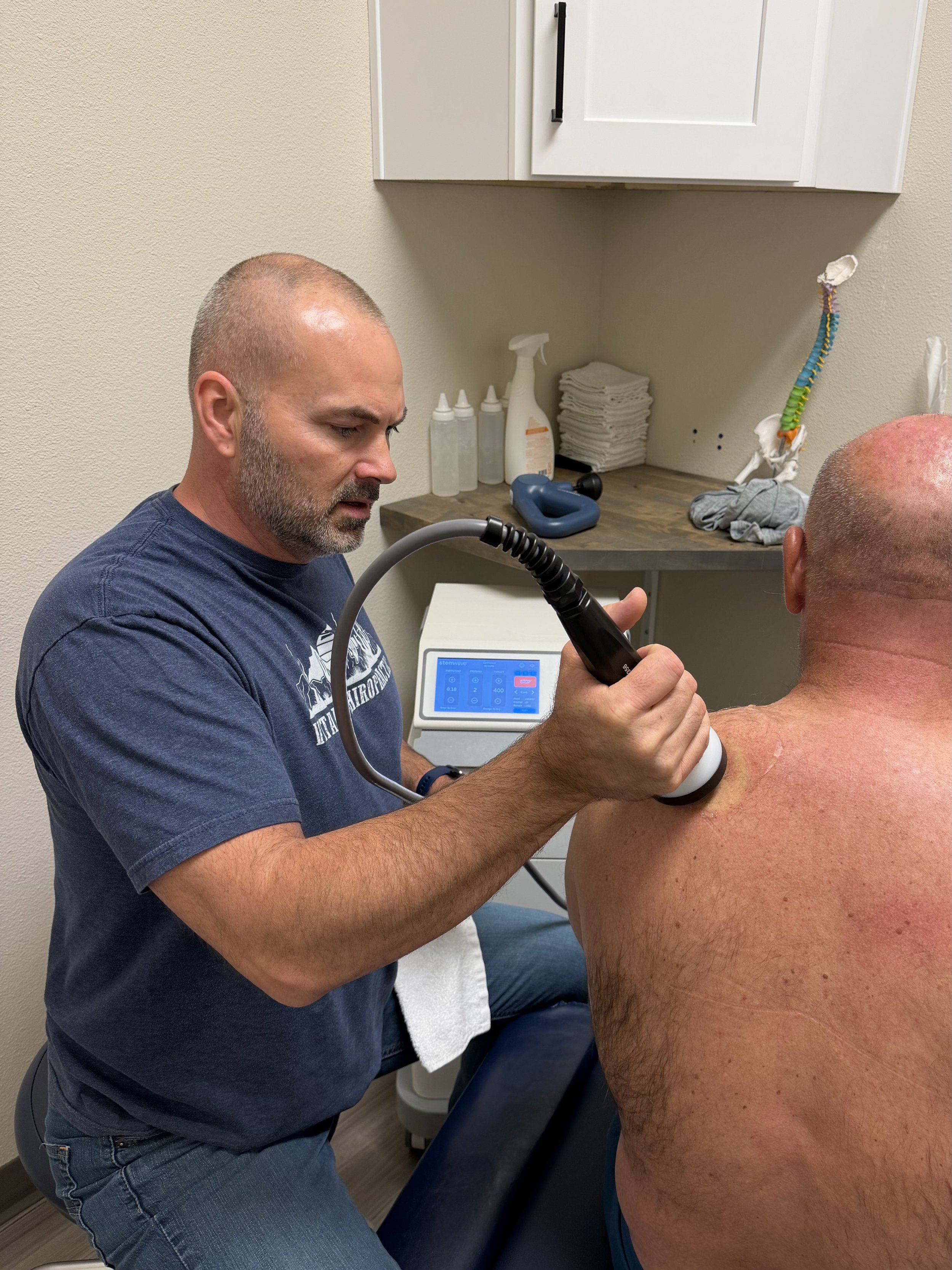
Some commonly marketed “shockwave” systems actually generate radial pressure waves.
These devices typically accelerate a small projectile inside the handpiece. When that projectile strikes an applicator, mechanical energy spreads outward into the tissues.
Radial pressure waves can be useful for certain superficial soft-tissue conditions, but their energy is greatest near the surface and disperses as it travels deeper.
Focused shockwave is different.
Focused systems are designed to concentrate acoustic energy at a specific depth within the body, allowing the clinician to target deeper structures such as tendons, ligaments, joint regions and bone.
Radial Pressure Wave vs. Focused Shockwave
Three Major Ways Focused Shockwaves Are Produced
Focused shockwave systems generally use one of three technologies:
Piezoelectric
Multiple electrically stimulated crystals generate pressure waves that converge toward a focal area.
Electromagnetic
An electromagnetic coil creates an acoustic pressure wave that is concentrated using a lens or reflector.
Electrohydraulic
A precisely controlled electrical spark is created inside a water-filled treatment head. The spark rapidly vaporizes a microscopic amount of water, generating a powerful acoustic shockwave. A reflector then concentrates that energy toward a focal region in the patient's tissue.
StemWave uses the electrohydraulic focused shockwave principle.
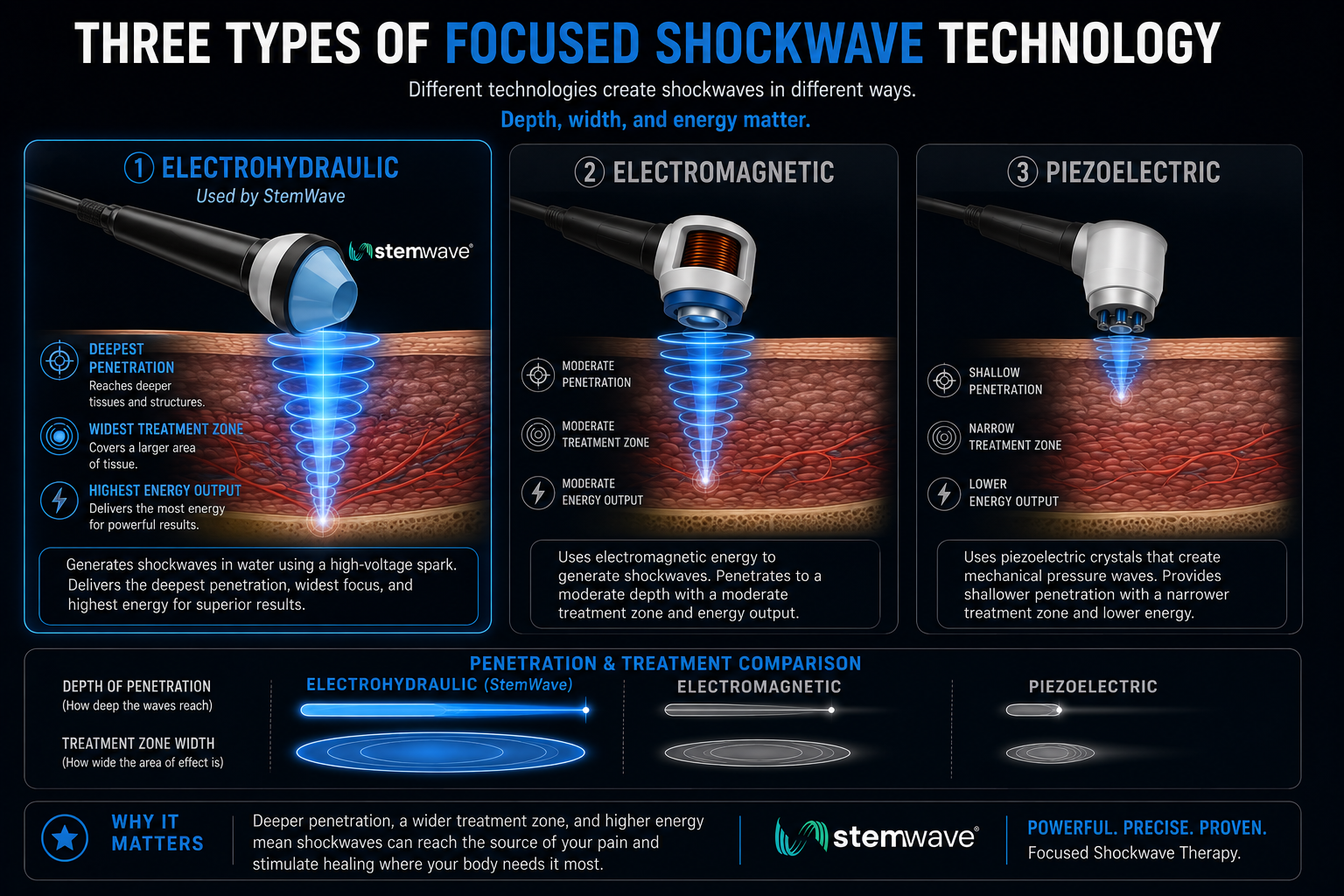
Rather than saying one technology is universally “better,” I think it is more accurate to say that these technologies create different acoustic fields and have different treatment characteristics. For deeper musculoskeletal targets, focused shockwave offers an important advantage: the ability to deliver significant acoustic energy below the surface rather than concentrating most of that energy at the skin.
What Happens When a Shockwave Reaches Injured Tissue?
This is where shockwave therapy becomes especially interesting.
The treatment isn't simply “breaking things up.”
A shockwave produces an extremely rapid mechanical pressure change through the tissue. Cells detect that mechanical stimulus and convert it into biological signals through a process known as mechanotransduction.
Those signals may influence processes involved in:
cellular activity and tissue repair
local circulation and angiogenic signaling
collagen and tendon remodeling
inflammatory signaling
bone and connective-tissue metabolism
chronic tendinopathy
calcific tendon deposits
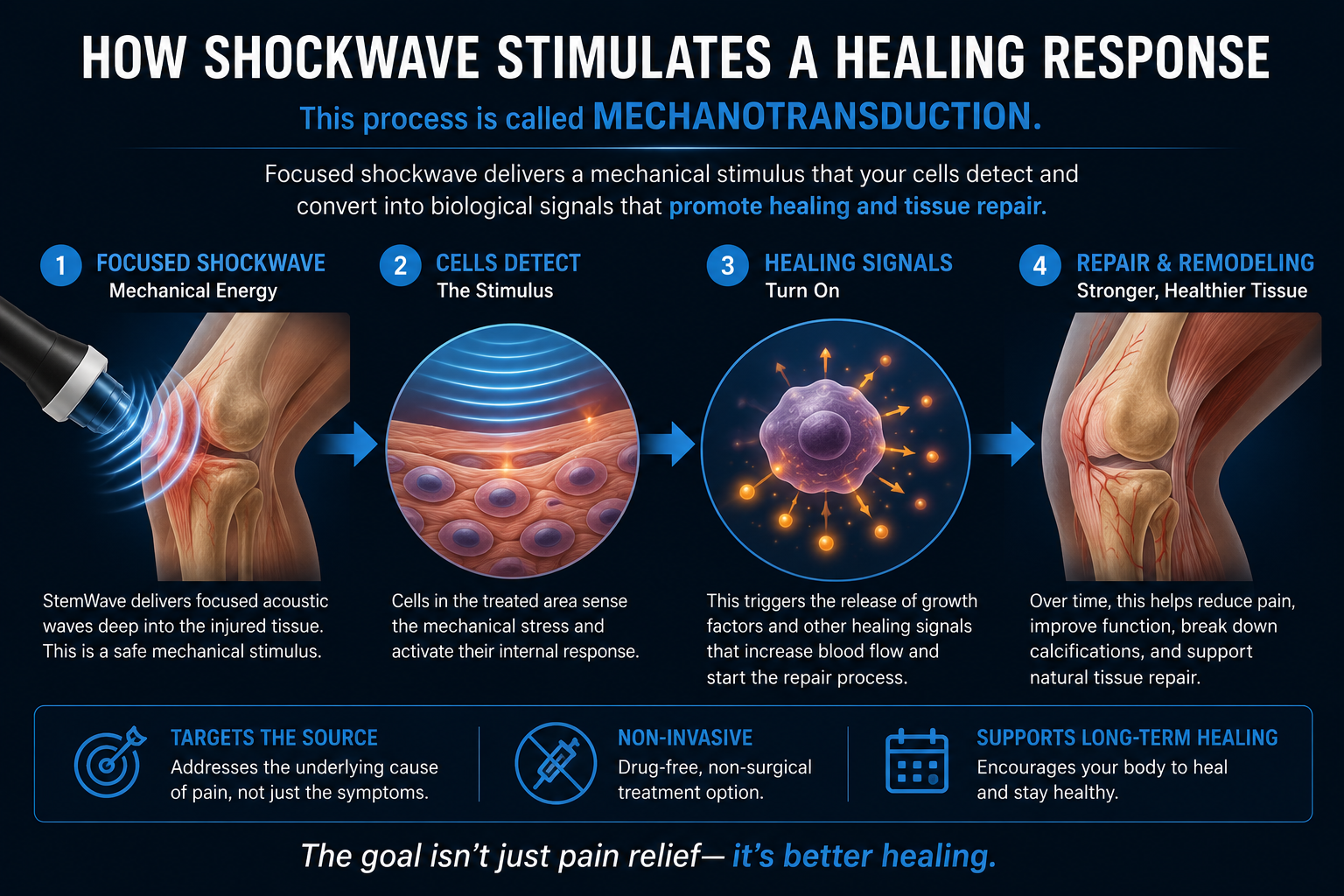
In calcific tendon conditions, the mechanical effects of shockwave may also help disrupt and remodel abnormal calcium deposits.
The goal isn't to injure healthy tissue. The goal is to provide a carefully controlled mechanical stimulus that may encourage tissue that has become chronically painful or poorly healing to enter a new biological healing response.
What About Knee Osteoarthritis and “Bone-on-Bone” Knees?
This is one of the most common questions I hear.
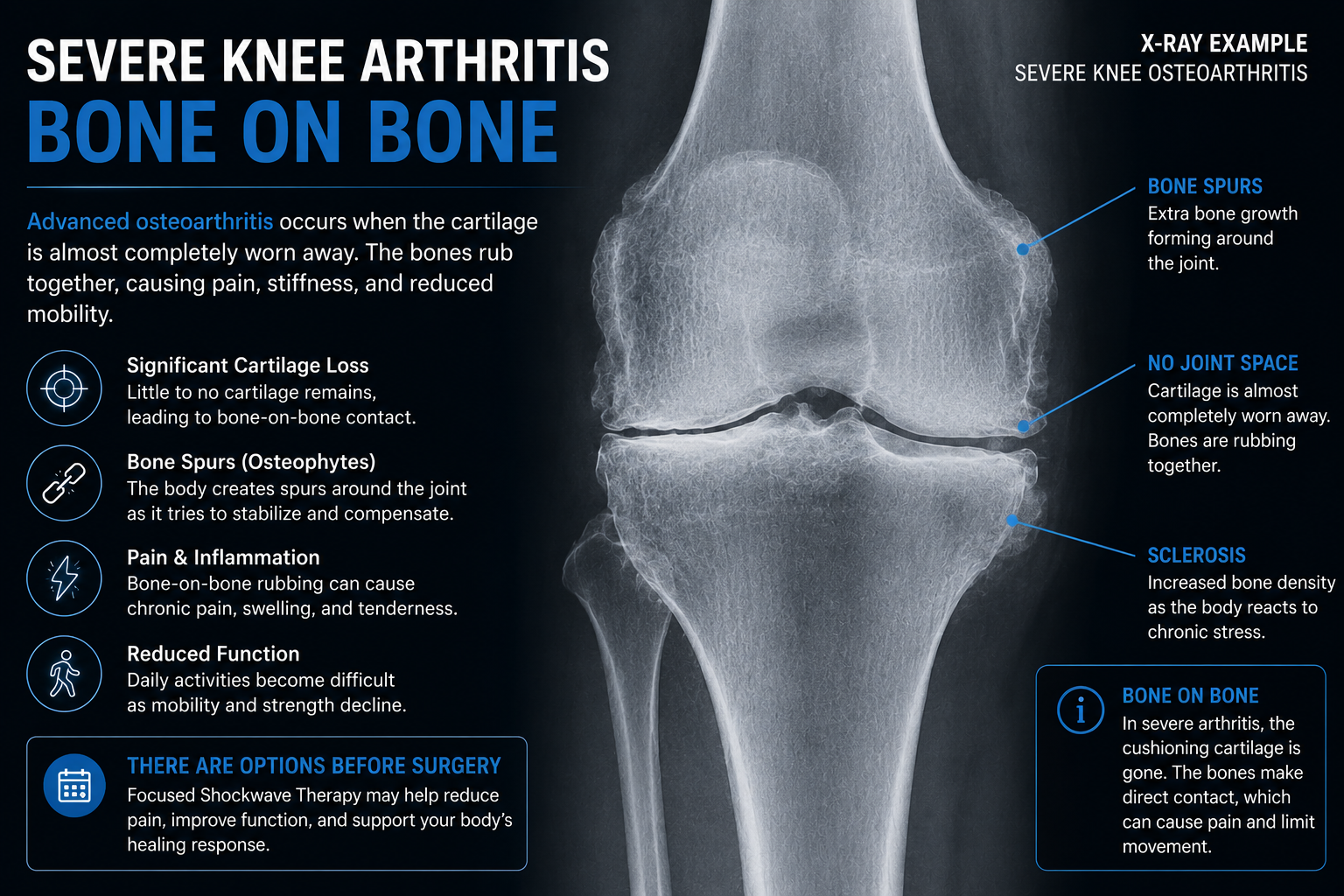
If you've been told you have knee osteoarthritis, severe degeneration or even a “bone-on-bone” knee, shockwave therapy does not magically replace missing cartilage and it should not be presented as a guaranteed alternative to knee replacement.
But osteoarthritis is more complicated than simply looking at the amount of cartilage visible on an X-ray.
The joint also includes bone, tendons, ligaments, joint capsule, muscles and surrounding connective tissues—all of which may contribute to pain and function.
Focused shockwave therapy is being studied for its effects on pain, function and biological responses in osteoarthritic joints.
For some people considering injections or surgery, it may therefore be reasonable to investigate whether a conservative treatment such as focused shockwave therapy is appropriate before moving to a more invasive option.
The important question isn't simply:
“Do I have arthritis?”
It's:
“Which tissues are contributing to my pain, and is there still an opportunity to improve how this knee functions?”
Thinking About Knee Surgery?
If you've been told that surgery may eventually be necessary, that doesn't automatically mean surgery is wrong.
Sometimes surgery is absolutely the appropriate treatment.
But if you have knee pain, knee osteoarthritis or a “bone-on-bone” diagnosis and would like to explore conservative options before making that decision, we can evaluate your knee and determine whether focused StemWave shockwave therapy may be appropriate.
Focused Shockwave Therapy in Tucson
Dr. Geoff Huls
Tucson, Arizona
StemWave Focused Electrohydraulic Shockwave Therapy
Knee Pain • Knee Osteoarthritis • Chronic Tendon Problems • Calcific Tendinopathy • Musculoskeletal Injuries